TW – There are pictures of a stoma prolapse included in this post. I am not a medical professional – please see your specialist if you are experiencing issues with your ostomy.
What is a Prolapsed Stoma?
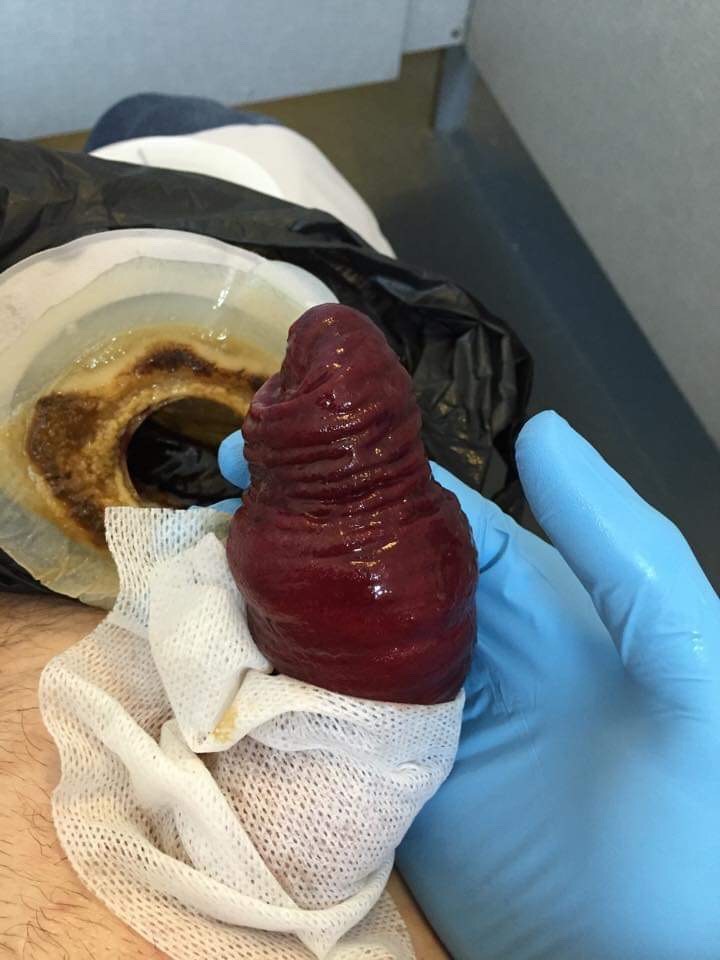
Sometimes, the bowel can extend in length from the stomal opening – anywhere from 2-3cm to over 10cm. While this can be very distressing and frightening, it is usually not serious. However, you should always contact your stoma nursee for a review if it happens to you.
What to do if your Stoma Prolapses
The stoma should remain a healthy pink/red colour and continue to function. If this isn’t the case and the stoma becomes darker in colour, seek urgent medical attentnion.
If your stoma prolapses it will inevitably get bigger, so it is important to ensure you cut your bags to fit. I generally get a prolapse or a retraction after a bad blockage and it usually takes around 2 or 3 days before my stoma is back to normal size.
What Causes a Stoma Prolapse?
A stoma can prolapse if the muscles surrounding it are wek. It can happen as a result of straining the abdominal muscles, when lifting for example.
Any activity that increases intra-abdominal pressure can cause a prolapse – so it’s important to be extra carefula nd follow your post-surgical physio advice.
If you are unwell and coughing/sneezing a lot, it may be a good idea to support your abdomen. Simply hold the area firmly when coughing/sneezing, I tend to press a cushion against my stomach.
What Should I Do If My Stoma Prolapses?
As advised above – if the stoma is getting darker in colour and not functioning, seek urgent medical assistance. Otherwise, you should contact your stoma nurse for support and advice.
An Inrerview With Chris
Firstly, I want to say tat Chris is an extreme case – he experiences large prolapses on a regular basis. Thi is not normal – many people with a stoma never experience a prolapse and for those that do, it is generally resolved pretty quickly. However, I aim to share stories of people living with chronic, and often invisible illnesses, and this is what he deals with on a daily basis.


Chris is 34 and lives in Derby with his dog, Zeus. His ifrst stoma surgery took place in 2011. He enjoys racing , ‘fiddling’ with cars and weightlifting, although struggles to do these now due to his health issues. He likes walking his dog, has posed for the Purple Wings charity 2017 calendar and enjoys spendig time wih his family.
When was your first prolapse?
First one happened rsndomly when I stood up from my desk at work and I didn’t even notice till I felt it.
I was told I had UC, then toxic megacolon, which reulted in the emergnecy stoma surgery. I then had surgery for a J-Pouch, that was then reversed and then I ended up back with a bag. The first prolapse happened about a year later.
Does it hurt?
Now, after I have had 6 or 7 surgeries trying to stop it from happening, it cripples me. I can feel it pulling across the top of my stomach.
What have they tried to fix it?
I have had 6 or 7 surgeries now to try and stop it happening – hernia repairs, stoma resiting and mesh – all have failed. I was referred to St. Mark’s Hospital in London and they tried a new trial procedure, tthat didn’t work either.


How often do you get them?
Anytime I am upright, even just sat up, when I don’t have my belt on. For me they still sometimes happen when I am wearing my belt. too.
What helps when your stoma prolapses?
Lying down. There is alot of talk about putting sugar on it but it doesn’t work – lay down and it will go back in. I also wear a belt for support.
What is the plan now refarding the proapses?
No real plan, they cannot fix it so now I just have to manage the prolapses as they happen.
Thank you to Chris for sharing about his experiences living with prolapses. I hope you find the information in this post useful and if you ever experience a prolapse – please ensure you speak to your stoma nurse!
Take care and keep safe,

 The Spoonie Mummy
Leave a comment